
Physics Games
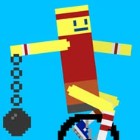
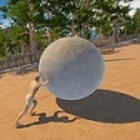








Physics Games turn gravity, momentum and collisions into the main challenge. Here you can balance on a unicycle, crash through brutal obstacle courses, build machines in a ragdoll sandbox, merge fruit in a box or duel with stick figures who fly across the arena. Each page explains how the physics shape the experience.
When the Rules of Motion Are the Gameplay
In most genres physics stay in the background. In Physics Games they are the whole point. Every jump, push and throw follows rules of weight and momentum, and learning those rules is how you improve. A slope gives you speed, a heavy object hits harder and a wobbly character falls if you lean too far.
Because the simulation reacts to every input, no two attempts play out exactly the same. That variety keeps runs fresh and often produces surprising, funny results.
Players who enjoy experimenting tend to love this category, since trying something odd just to see what happens is often rewarded.
Main Styles on This Shelf
- Ragdoll obstacle courses. Guide a fragile character through hazards and survive the crashes.
- Balance challenges. Keep a rider or object upright with careful corrections.
- Sandboxes. Build contraptions and test how objects and bodies react.
- Physics duels. Aim projectiles or swing weapons with weight and arc in mind.
- Physics puzzles. Drop and stack objects so they merge or settle in the right place.
Physics Games in different styles share one habit: small, deliberate inputs usually beat frantic button presses.
Momentum, Weight and Timing
Momentum is the most important idea. Building speed down a slope can carry you over a gap, but too much speed sends you flying past the landing. Learning how much momentum each move needs is the core skill in many titles.
Weight changes everything too. Heavy weapons drop faster and hit harder, while light ones travel further. In a duel, picking a weapon whose arc you understand matters more than raw power.
Timing ties it all together. A push at the right moment can save a run, while the same push a second later causes a crash.
Shared Physics in Fart Together
Our site's main game shows how physics can drive co-op play. In Fart Together, the raft reacts to the force, direction and timing of every hippo's thrust, so the crew must combine their pushes to move cleanly. Opposing blasts cancel out and spin the raft, while synchronized ones send it surging forward.
That shared simulation is the reason the game is so funny with friends, and the raft steering guide shows how thrust adds up or cancels out. The physics are believable enough to plan around but loose enough to surprise everyone.
Players who enjoy that idea will find many related experiences below, from solo balance tests to chaotic multiplayer duels.
Getting Better at Physics Games
- Make small corrections instead of big ones.
- Watch how objects move before acting.
- Use slopes and momentum rather than fighting them.
- Restart quickly and learn from each crash.
Patience is the hidden skill in every game of this kind. Many players fail because they panic when something starts to tip, while calm players recover with a gentle adjustment.
Repetition also helps. Physics are consistent enough that practice builds real muscle memory, and a game that felt impossible on the first try often feels fair by the tenth.
Physics Games for Different Players
Different players get different things from this category. Puzzle fans enjoy titles where planning each drop or push leads to a clean solution. Action fans enjoy duels and brawls where weight and recoil decide fights. Creative players gravitate to sandboxes where they can build machines and test them to destruction. Physics Games cover all three, which makes this one of the broadest shelves on the site.
Short sessions suit many entries. A single balance course or a few duel rounds fit easily into a break, and restarting is usually instant.
Longer sessions suit sandboxes and climbing titles. Those reward hours of practice, and progress builds slowly as your understanding of the simulation grows.
Solo and Multiplayer Physics
Solo physics titles are about mastery. You learn a control scheme, practice a hard section and eventually clear it, and the satisfaction comes from your own improvement.
Multiplayer physics is about chaos. When several players share the same simulation, unexpected collisions and combined forces create moments nobody planned, and that unpredictability is often the funniest part.
Many Physics Games here offer both. Trying a title alone first and then with friends shows two very different sides of the same rules, and it helps you decide which style you enjoy more.
Why Crashes Are Part of the Fun
Failure in Physics Games is rarely boring. A rider tumbling down a hill or a stick figure launched across the screen is entertaining even when it means starting over.
That is why so many of these titles became popular with streamers and clip makers. The most memorable moments are often the biggest mistakes.
Some players find the unpredictability of a physics game frustrating, especially on the brutal rage shelf, especially in precise challenges, but most come to enjoy the surprises.
Physics Games turn momentum, weight and timing into a source of challenge and comedy, and from a balancing unicycle to a shared fart-powered raft, every run shows how much fun a good simulation can be.